Fall Planting Design & Installation Ideas
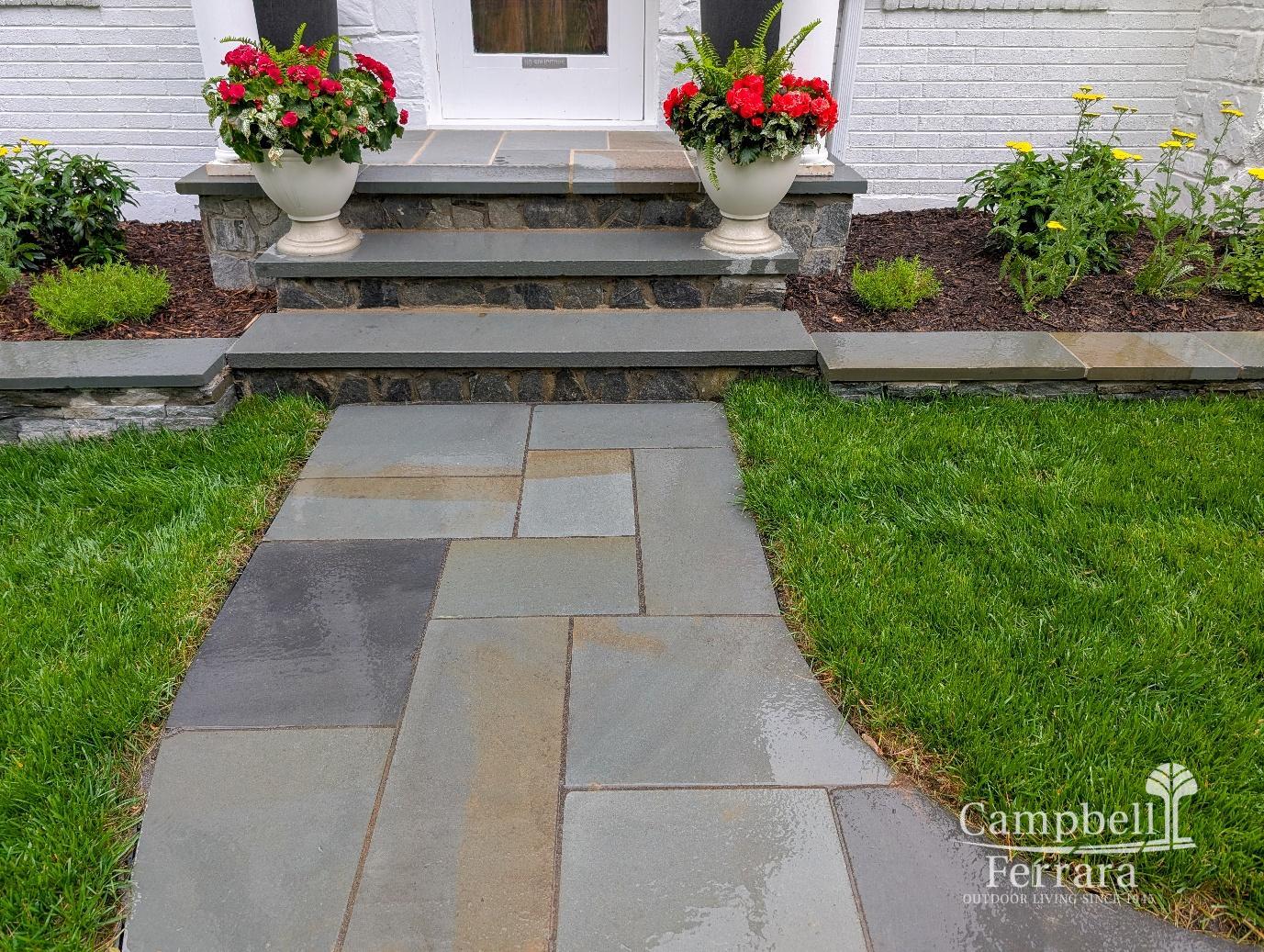
Walkway installation shapes how people move through your property. A good walkway guides guests to the front door, connects outdoor destination spaces, and makes daily movement safer. It also adds structure to the yard without overwhelming the home’s architecture.
The best walkway ideas start with real use. Where do people naturally walk? Which route feels direct? Which areas need better footing after rain? A walkway should answer those questions before anyone selects stone, brick, pavers, or concrete.
For Northern Virginia homeowners, walkways often connect patios, steps, garden beds, gates, seating areas, and feature landscape lighting. They can also support a more comfortable outdoor living environment by making the yard easier to enjoy in every season. Walkways also help homeowners avoid worn lawn paths and muddy shortcuts. A clear route protects planting beds, keeps foot traffic predictable, and makes the yard easier to use after rain. That practical value matters as much as the finished look.
Homeowners can review Campbell & Ferrara’s patio, walk, and step options in Alexandria, VA as they compare materials, layouts, and design details.
1. Flagstone Walkway Installation for Natural Character and Lasting Style
Flagstone walkway installation works well for homeowners who want a path with natural texture and long-term appeal. Flagstone gives each walkway a distinct look because every stone has its own color, surface, and edge variation.
Two common styles are geo-cut flagstone and irregular flagstone. Each provides a different level of formality.
Geo-Cut Flagstone Walkways
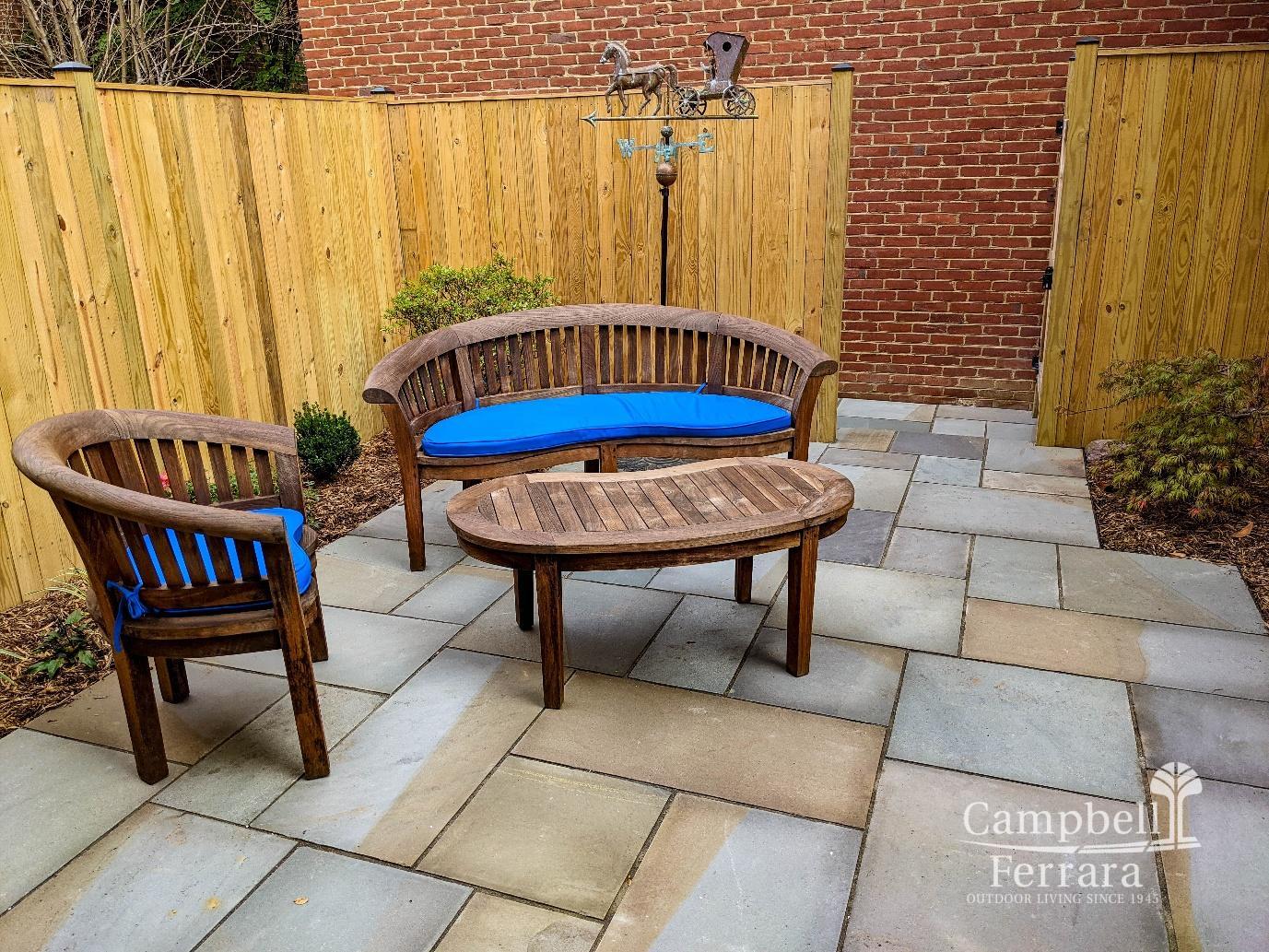
Geo-cut flagstone uses stone cut into cleaner shapes. The pieces may appear rectangular, square, or laid in a more ordered pattern. This style works well for front entries, walkways near patios, and garden paths with a structured layout.
Geo-cut flagstone keeps the beauty of natural stone while giving the walkway a tidy appearance. It can suit both traditional homes and updated exteriors, especially when the joints, borders, and planting beds are carefully planned.
Irregular Flagstone Walkways
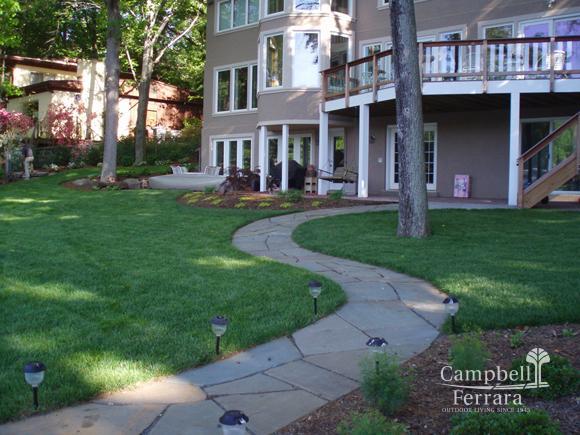
Irregular flagstone uses stones with varied shapes. This creates a looser, more natural path. It often works well through gardens, side yards, and informal outdoor areas.
This style can feel relaxed, but it still needs proper installation. Stone thickness matters. The base should support each piece evenly. Joint material also affects the final look and the amount of maintenance needed. Gravel, mortar, polymeric sand, or low-growing plants can each create a different effect.
Flagstone also needs good drainage. Water should be directed away from the path so that stones stay stable. Surface texture can help with traction, which matters near shaded areas, steps, or garden beds.
Campbell & Ferrara’s landscape experts can help homeowners choose a flagstone style that fits the wider landscape design plan. When the path, entry, plants, and lighting work together, flagstone can create an extraordinary first impression.
2. Paver Walkway Installation for Flexible Patterns and Strong Performance
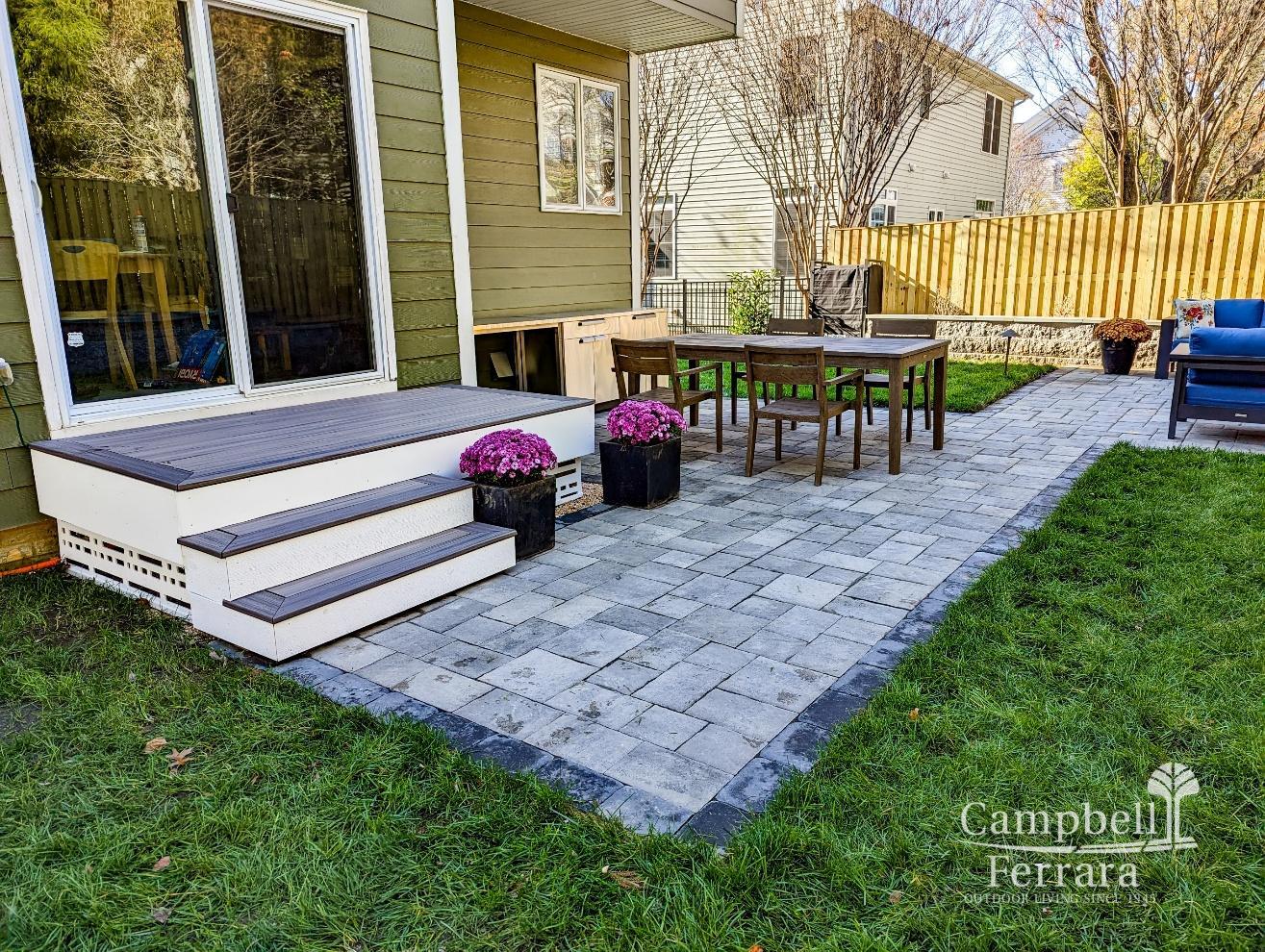
Paver walkway installation provides homeowners with a reliable way to add clean lines, color, and structure to their yards. Pavers come in many shapes, sizes, and finishes, which makes them useful for front walks, side-yard paths, garden routes, and connections to patios.
Pavers also offer practical benefits. If one paver becomes stained or damaged, it can often be replaced without rebuilding part(s) of the walkway. This makes pavers a smart choice for busy areas, especially near driveways, outdoor seating, and everyday entry routes.
Good paver design starts with proportion. A narrow walkway may feel tight if two people need to pass each other. A wider path can feel more comfortable near a front entry or outdoor entertainment area. Pattern also matters. A running bond pattern feels simple and orderly. A herringbone pattern can add visual movement and strength in higher-use spaces.
You should compare color, texture, edge restraints, base depth, border style, and joint sand before choosing a final design. Paver colors should also relate to the home, stonework, steps, and nearby patios.
Pavers work especially well as part of hardscape design because they can coordinate with retaining walls, sitting walls, steps, and outdoor rooms. Our team of experts can help compare paver styles, joint materials, and layouts so the walkway looks planned, not patched together after the fact.
3. Brick Walkways for Classic Detail and Warm Curb Appeal
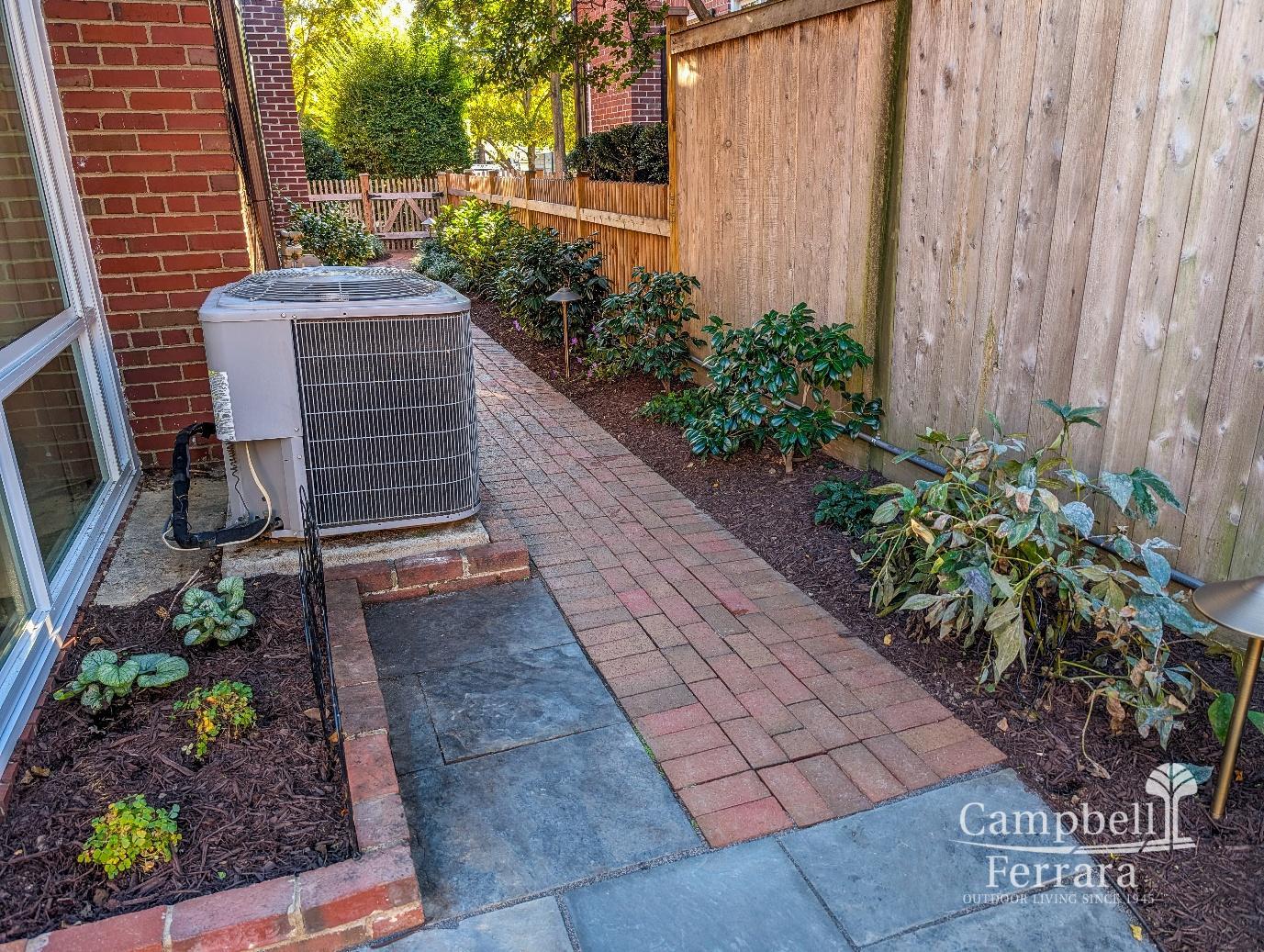
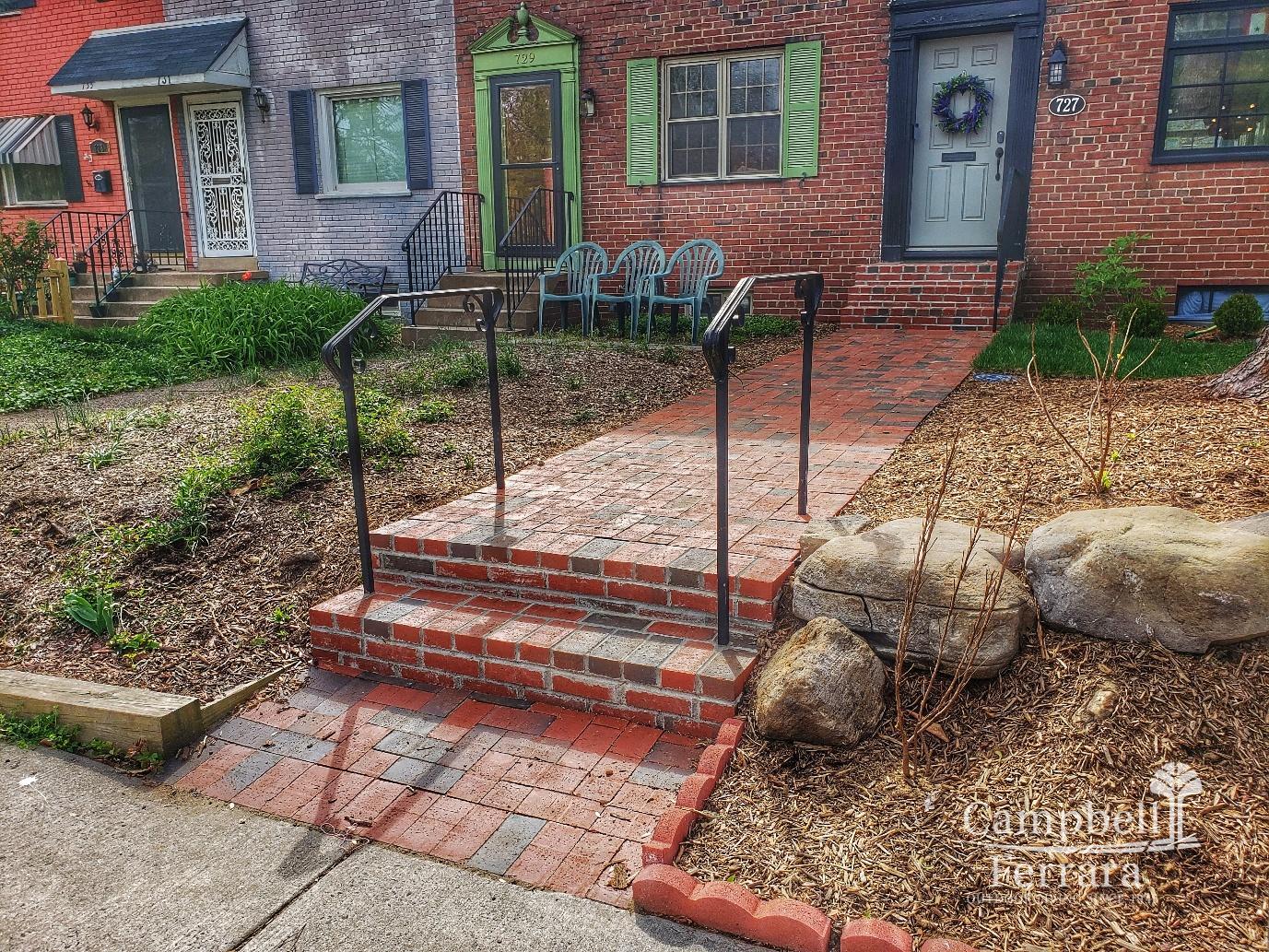
Brick walkways suit many Northern Virginia homes, especially colonial, traditional, and garden-style properties. Brick has a warm color palette that can naturally connect with older homes, masonry details, and planting beds.
A brick walkway can work well at a front entry, along a side yard, through a garden, or near a small courtyard. It can feel formal or relaxed depending on the pattern. Running bond looks clean and simple. Basketweave adds more detail. Herringbone creates a strong surface and a more active pattern.
Brick also pairs well with stone or paver borders. A brick path with a stone edge can feel established and sturdy. A brick border around a flagstone walkway can tie the path back to a brick home.
Installation details matter. A stable base helps reduce shifting. Edge restraint keeps the shape clean. Drainage helps prevent low spots where water can collect. In shaded areas, moss can make brick slippery, so surface choice and maintenance deserve attention.
A smooth, stable brick walkway can also be pet friendly because it gives pets and people a clear route between yard areas. It saves everyone from cutting through damp grass, which is helpful after a summer storm. Your shoes may appreciate the planning too.
4. Concrete Walkway Installation for Clean Lines and Practical Function
Concrete walkway installation is a strong option for homeowners who want a clean, durable, and practical path. Concrete works well for front walks, side-yard access, utility paths, driveway connections, and routes to gates, sheds, or service areas.
Concrete does not need to feel plain. A good layout can make a major difference. Width, curves, control joints, nearby planting beds, and subtle borders all affect the final look. A broom finish can improve traction. Saw-cut joints can create a clean pattern. Exposed aggregate may add texture where appropriate.
Concrete can connect well with outdoor kitchens, an outdoor fireplace, garage access, and other everyday routes. It is especially useful when homeowners need a direct, stable path that can handle frequent use.
Still, concrete needs careful planning. The base should be prepared correctly. Grading should move water away from the walkway. Control joints help manage cracking. The path should also meet the edges of steps, lawn, or patio cleanly.
Experienced hardscape contractors and hardscape experts can help concrete walkways fit grade changes, drainage needs, and nearby paved areas. This matters because a walkway should perform well and look intentional from the first day forward.
5. Natural Stone Stepper and Irregular Flagstone Pathways for Garden Movement

Natural stone steppers and irregular flagstone stepper pathways work well when homeowners want a softer route through a garden, lawn, or side yard. These paths guide movement without creating a wide paved surface.
Steppers often work best in informal areas. They can lead to a bench, a gate, a side garden, a quiet corner, or a small seating area. They also work well near planting beds where a full walkway may feel too heavy.
Comfort starts with spacing. Stones should match a natural walking stride. If the gaps are too wide, the path becomes awkward. If stones wobble, the path feels unsafe. Larger stones often work better than small pieces because they provide more stable footing.
The material between stones also changes the character of the path. Grass feels soft but may need trimming. Gravel drains well and gives a crisp edge. Mulch can work in garden areas. Low-growing groundcovers can soften the path, though they need the right sun and moisture conditions.
Stepper pathways can support outdoor living by connecting smaller yard destinations. A neglected side yard can see a practical transformation with stable stones, planting, walkway lights, and additional outdoor lighting. The result can feel useful without looking overbuilt.
6. Walkway Accents, Borders, and Lighting Details That Finish the Design
Accents help a walkway feel complete. They also give homeowners a chance to add detail without making the path too busy.
Common accent options include paver borders, brick borders, stone edging, contrasting color bands, gravel joints, planting edges, low walls, and path lighting. These details can define the walkway edge, keep loose materials contained, guide the eye, and connect the path to nearby hardscaping.
Borders often do the most visible work. A flagstone walkway with a brick border can connect a stone patio to a brick home. A paver walkway with a darker border can frame the path and make curves feel cleaner. A stone edge can help a garden path feel more settled beside planting beds.
Lighting also matters. Walkway lights can improve safety near steps, slopes, and changes in direction. Landscape lighting can make the route to a patio, gate, driveway, or front door easier to use after dark. It can also highlight stone texture, planting beds, and key turns in the path.
The best accents support the walkway rather than compete with it. Too many colors or materials can make a small path look cluttered. Our experienced walkway experts can help homeowners avoid narrow paths, weak edge support, poor drainage, and mismatched materials.
Plan Your Walkway Installation in Alexandria, VA
Flagstone, pavers, brick, concrete, natural stone steppers, and accent details each serve a different purpose. The right choice depends on the home’s style, main walking routes, drainage, maintenance preferences, garden layout, and connection to patios, steps, lighting, and outdoor rooms.
A well-planned walkway should make the property easier to use. It should guide movement, support safety, and fit the home’s exterior without trying too hard.
Campbell & Ferrara can help homeowners plan walkways that support daily use, curb appeal, and long-term outdoor living goals.
For help planning your next walkway project, contact us or call Campbell & Ferrara at (703) 354-6724 to speak with our team.
Related posts