Fall Planting and Maintenance Guide

Creating a sustainable landscape entails much more than adding plants or outdoor features. It requires thoughtful planning, ecological awareness, and long-term stewardship of your property.
At Campbell & Ferrara, our approach to sustainable landscapes focuses on building healthier soils, conserving water, supporting pollinators and biodiversity, and selecting durable, low-maintenance plants that perform beautifully for decades.
In this blog post, we walk you through the practices that make sustainability both achievable and functional. You’ll learn how thoughtful plant choices, responsible water management, reduced chemical use, and soil-building techniques work together to create a resilient and environmentally-friendly landscape.
1. Use Native Plants and Remove Invasive Plants
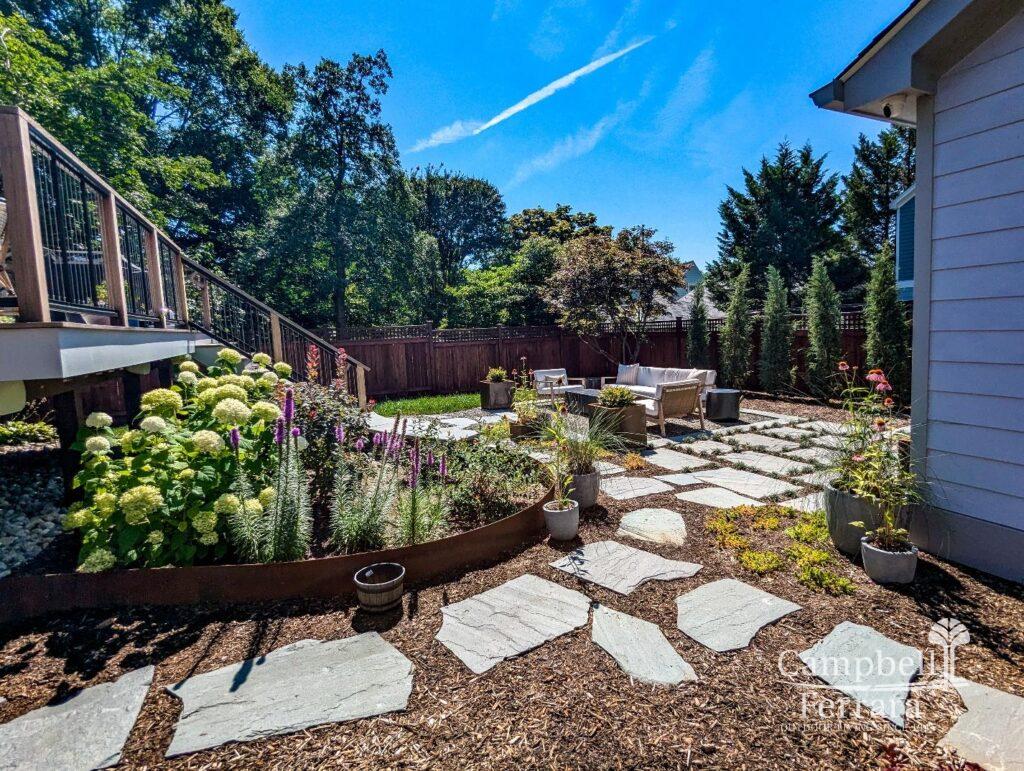
A sustainable landscape begins with plant choices that naturally support your environment. Native perennials, shrubs, grasses, and trees are adapted to the Mid-Atlantic region, meaning they require fewer inputs to thrive. Since they evolved with local rainfall patterns, soil types, and temperatures, they typically need less supplemental watering and are far more resilient than many imported or exotic alternatives.
In contrast, invasive plants can cause a significant imbalance. Aggressive species such as English ivy, Japanese honeysuckle, tree-of-heaven, kudzu, and porcelain berry compete with native plants for sunlight, space, and nutrients.
Over time, the rapid growth of invasive plants can overtake your garden beds, smother young trees, and even damage structures. Removing these invaders—and preventing their return—is essential to creating a healthy, sustainable outdoor space.
Campbell & Ferrara evaluates landscapes to identify which plants are beneficial and which ones may harm long-term ecological health.
Native plantings also provide food and habitat for pollinators, birds, and beneficial insects. By leaning into biodiversity, you strengthen your yard’s natural defenses and reduce the need for outside intervention. These plants help create an outdoor living space that feels connected to nature rather than competing with it.
2. Water Conservation & Stormwater Management
Thoughtful water management is one of the pillars of sustainable landscape design. Many properties receive more rainfall than their soil or drainage systems can handle, leading to runoff, erosion, and pooling water. Campbell & Ferrara focuses on solutions that slow, spread, and capture water rather than allowing it to escape your landscape.
One of the most effective strategies is installing rainwater harvesting systems, such as rain barrels or cisterns. These systems capture roof runoff and store it for later use, reducing your dependence on municipal water.
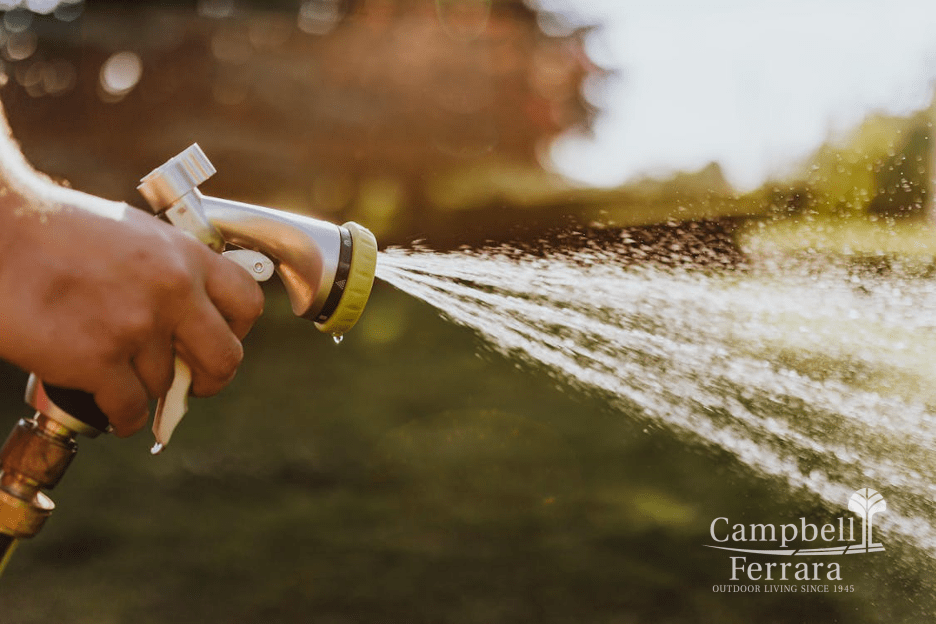
Smart irrigation techniques like drip irrigation apply water directly to plant roots, preventing waste and minimizing evaporation. Watering early in the morning also helps conserve moisture and allows plants to absorb water before temperatures rise.
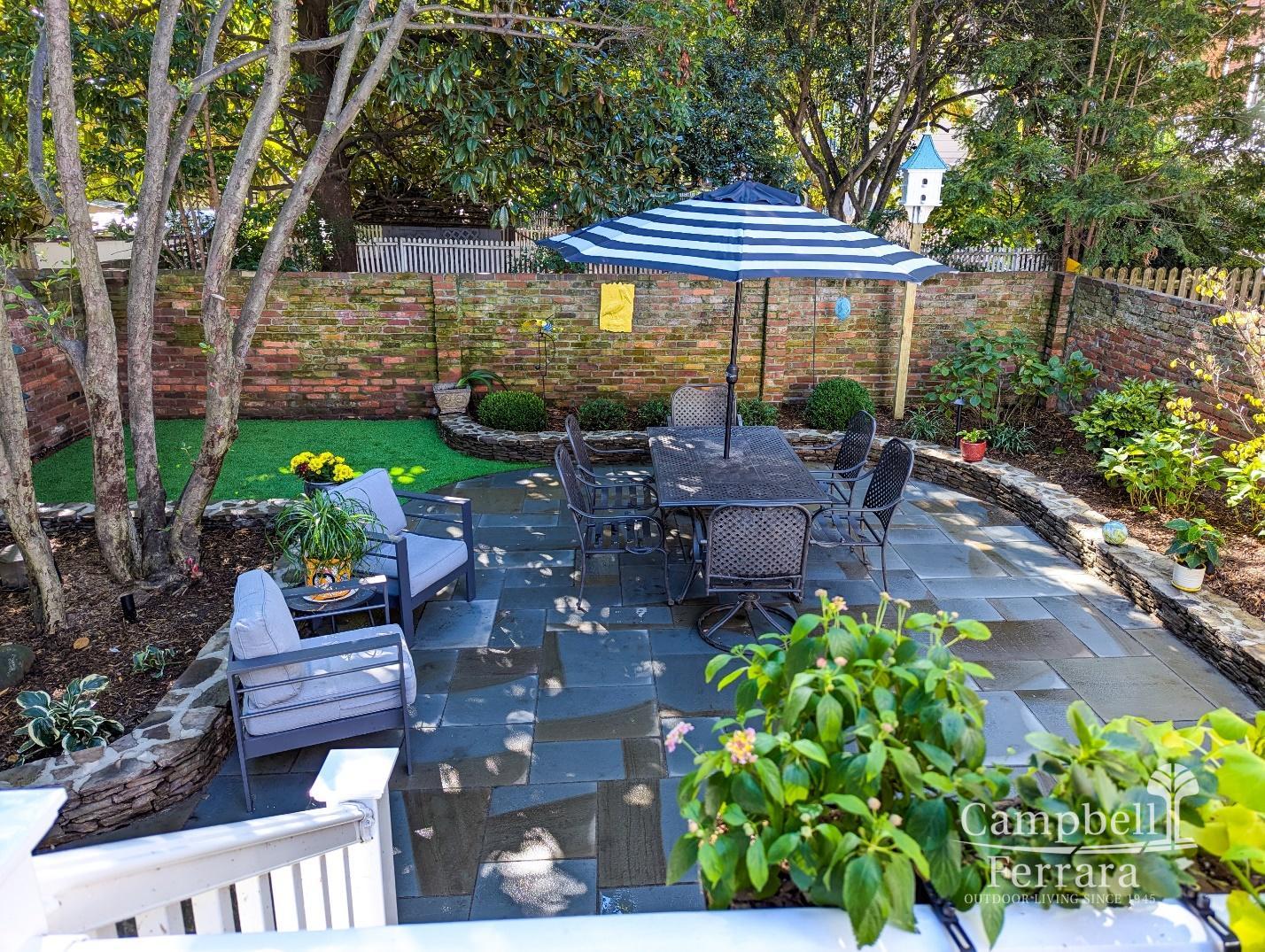
Stormwater management also plays a crucial role in sustainability. Permeable pavers are an excellent alternative to traditional paving surfaces. They allow rainwater to soak into the ground rather than flow away, supporting groundwater recharge and minimizing erosion. This helps create a more resilient setting for your hardscape design, including walkways and gathering areas.
Improper drainage can undermine even the most beautiful landscape, causing soil erosion, plant decline, foundation problems, and waterlogged lawns.
To better understand how drainage impacts a sustainable outdoor space, Campbell & Ferrara offers a range of solutions. Explore these options in detail by reviewing Comparing 3 Different Types of Drainage Solutions.
3. Reduce Chemical Use
Reducing chemical inputs in your landscape not only protects surrounding ecosystems but also helps create a safer space for people, pets, and wildlife. At Campbell & Ferrara, we recommend starting with preventative care rather than relying on reactive treatments. Building healthy soil, watering properly, and choosing plant varieties suited to your site make your landscape more resilient, reducing the need for pesticides or synthetic fertilizers.
When pests or diseases occur, start with natural approaches. Companion planting can discourage unwanted insects while simultaneously attracting beneficial ones.
Organic treatments like insecticidal soap or neem oil provide targeted control while minimizing harm to the surrounding environment. These solutions are effective for specific concerns, such as soft-bodied insects or fungal issues, while being gentler on beneficial organisms.
Here is a comparison of different organic treatment styles so that you can decide which is the most appropriate for your garden.
| Organic Treatment | Best For | Target Pests/Diseases | Application Frequency | Safety for Beneficial Insects |
| Neem Oil | Broad-spectrum: aphids, mites, caterpillars, fungal prevention | Both contact & preventive | Every 7–14 days | Mostly safe (avoid bees when wet) |
| Horticultural Oil (Dormant/Superior) | Overwintering eggs, scale, and mites | Smothering action | 1–2 times per season | Safe once dry |
| Bacillus thuringiensis (Bt) | Caterpillars & mosquito larvae | Specific to caterpillars & certain larvae | Every 7–10 days during infestation | Completely safe |
| Diatomaceous Earth (food-grade) | Crawling insects (ants, slugs, beetles) | Mechanical action (dries out exoskeleton) | Reapply after rain | Safe (avoid inhaling) |
| Pyrethrin (from chrysanthemum) | Flying & crawling insects | Broad-spectrum, fast-acting | As needed, short residual | Moderately safe (harms bees & aquatic life) |
| Beneficial Nematodes | Soil-dwelling larvae (grubs, fungus gnat larvae, root weevils) | Parasitic microscopic worms | 1–2 times per season | Completely safe |
| Garlic or Hot-Pepper Spray | Aphids, caterpillars, deer & rabbit repellent | Repellent & mild contact action | Every 5–10 days or after rain | Very safe |
Chemical treatments should always be a last resort and used only when necessary—and even then, only in targeted applications. This mindful approach to chemical use is similar to how homeowners make thoughtful decisions about upgrades in their outdoor living environment.
Sustainable choices often provide long-term benefits and require fewer interventions over time. Campbell & Ferrara’s landscape experts help homeowners make thoughtful decisions that balance plant health, environmental stewardship, and aesthetic goals.
4. Build Healthy Soil
Healthy soil is the foundation of every sustainable landscape. Without it, plants struggle to develop strong roots, access nutrients, or regulate moisture. Landscaping experts at Campbell & Ferrara emphasize the importance of enriching soil through organic matter, which helps improve structure, aeration, and water retention.
Incorporating compost, aged manure, shredded leaves, or humus strengthens soil fertility and nurtures beneficial organisms—including earthworms, fungi, and microorganisms. Applying organic matter in layers and watering as you go helps create balanced soil that supports long-term plant health. This approach encourages stronger root development and reduces the need for frequent fertilization.
Additionally, low-tillage or no-till gardening helps preserve soil integrity by avoiding disruption of its natural ecosystem. When soil is left undisturbed, nutrient cycling remains active, and beneficial organisms can thrive. This results in healthier plant growth and increased moisture retention, reducing stress during periods of drought.
Soil testing is another essential step. Understanding pH levels and nutrient imbalances allows you to make precise, informed adjustments rather than guessing and potentially over-amending. Common organic amendments—such as peat moss, aged animal manure, shredded leaves, or composted mushroom substrate—can be added based on your soil’s unique needs.
Strong soil supports everything built on top of it, from lawns and gardens to constructed elements that complete your outdoor living space. Understanding how soil health influences long-term structural stability is essential when building beautiful, long-lasting patios that seamlessly integrate with thoughtful landscape design.
Conclusion
Creating a sustainable landscape is not just an environmental choice—it’s an investment in long-term beauty, function, and resilience.
Campbell & Ferrara’s combination of ecological knowledge, design expertise, and craftsmanship ensures that your outdoor space supports healthy plant life, efficient water use, and a more balanced ecosystem.
Sustainable practices enrich your landscape at every level. This is true whether you’re updating garden beds, evaluating drainage, or planning functional features like patios or an outdoor fire pit.
If you’re ready to enhance your property with a more environmentally-responsible design, Campbell & Ferrara is here to guide you with expert solutions tailored to your landscape’s unique needs. Contact us online or call us at (703) 354-6724 to discuss your goals and explore your options with our dedicated team.
Related posts