Natural Privacy Screening Options for a Beautiful and Functional Outdoor Living Environment
Winter in Northern Virginia can be beautiful. But the chilly season also brings its own set of challenges for your landscape.
If you’ve noticed water pooling in your yard or soggy areas near your home, these are signs that drainage problems could be lurking beneath the surface. Addressing these issues during the colder months in Northern Virginia Zone 7 is actually a smart move.
With the right grading strategies and winter drainage solutions, you can protect your property, maintain a healthy, pet-friendly outdoor living environment, and even enhance your yard’s overall aesthetic.
In this guide, we’ll explore a range of options—from French drains and swales to rain gardens and permeable pavements—so you can make informed decisions for your landscape before the thaw.
Understanding Winter Drainage Challenges in Zone 7
If you live in Northern Virginia, you know that winter brings more than just chilly temperatures and occasional snow. Cold, wet weather combined with rainstorms can reveal weaknesses in your yard’s drainage that may have gone unnoticed during the warmer months.
Water pooling near your foundation, soggy lawns, or muddy patches are all signs that your landscape grading needs attention.
Winter is actually one of the best times to address these issues. Why? Because grading adjustments and drainage improvements now ensure that when spring arrives, your property is ready to handle rain, melting snow, and the heavier runoff that comes with the season.
Proper drainage isn’t just functional; it can also enhance your outdoor living environment and elevate the beauty of your yard.
French Drains: Efficient Water Management
One of the most effective ways to manage excess water is with a French drain. This system consists of a perforated pipe laid in a gravel-filled trench that redirects water away from problem areas, such as your home’s foundation or soggy low spots in your yard.
French drains work particularly well in Northern Virginia’s Zone 7 winter conditions. During the rainy season or after snow melts, water tends to accumulate in areas with poor grading. Installing a French drain ensures that this water is quickly moved away from your property, preventing soil erosion and foundation damage.
A well-designed French drain not only keeps your landscape dry but can also complement your hardscape design. Imagine a subtle trench hidden beneath a beautifully designed walkway or integrated into a patio area, providing both functionality and aesthetic appeal. With the help of Campbell & Ferrara’s landscape experts, you can create a system that fits seamlessly into your outdoor living environment.
Dry Wells and Catch Basins: Hidden Storage Solutions
Another winter drainage solution to consider is a dry well or catch basin. These systems act as underground reservoirs that collect excess water and allow it to seep into the ground slowly. This approach is perfect for areas where surface water pools without an immediate outlet.
During Northern Virginia winters, rain can quickly saturate your yard, creating puddles that linger for days. A dry well or catch basin absorbs this water, reducing the risk of ice forming in walkways or near outdoor entertainment areas. When combined with proper grading, these systems provide long-term protection for your landscape, ensuring your yard stays functional and safe throughout the season.
Swales and Dry Creek Beds: Natural Water Flow Solutions
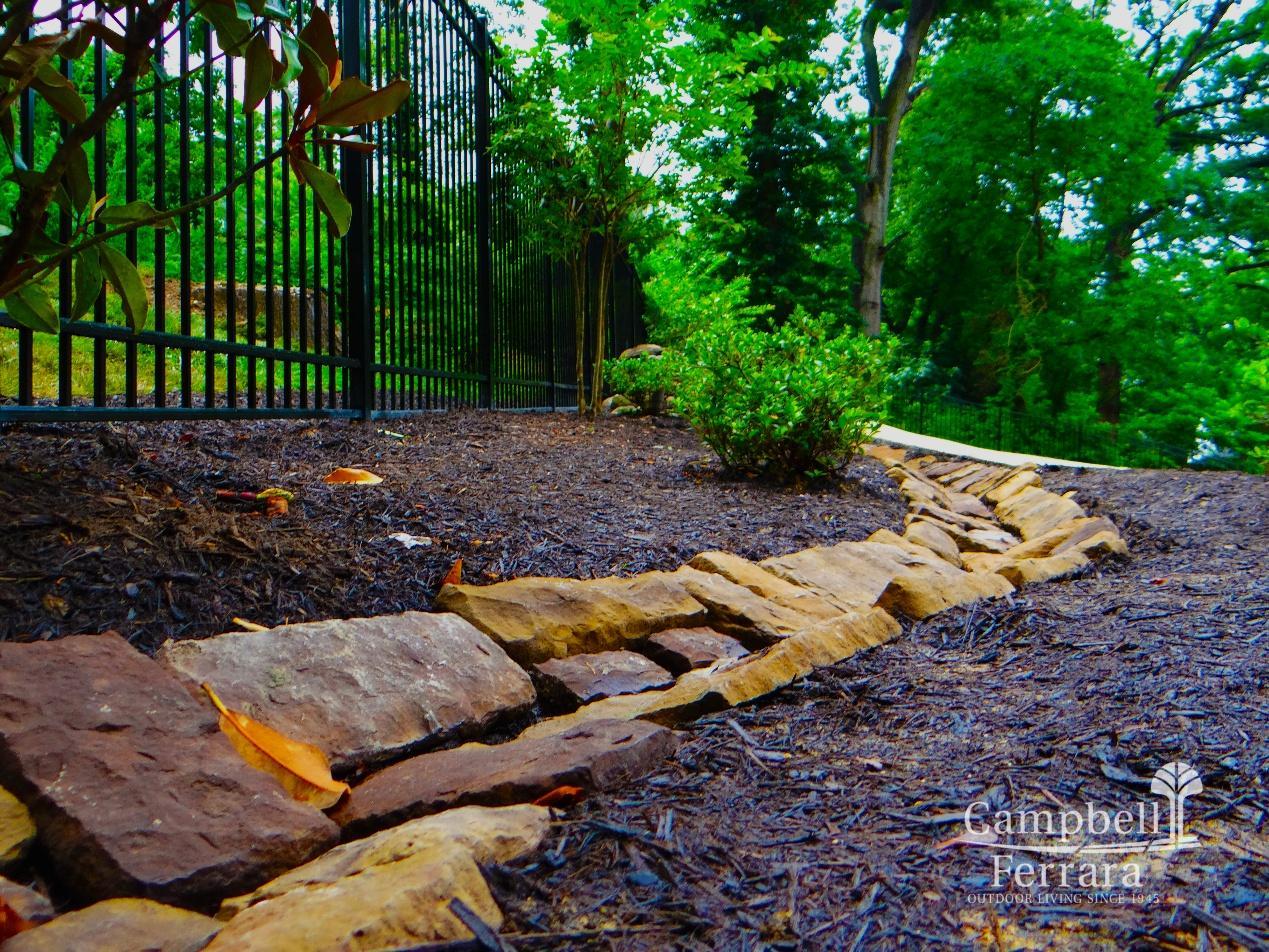
If you prefer a more natural approach, swales or dry creek beds may be the right solution. These are shallow, gently sloping channels lined with rock or gravel that redirect surface water to appropriate areas of your yard.
Swales are particularly useful in Northern Virginia because winter rain can quickly overwhelm poorly graded landscapes. By guiding water away from structures and sensitive areas, swales prevent erosion, maintain your lawn’s health, and keep your walkways and patios safe.
You can even turn a swale into a landscape design feature. By adding stones, native plants, or subtle curves, a dry creek bed can enhance your yard’s beauty while solving drainage problems.
Learn more about designing functional yet aesthetically stunning swales in our blog: A Guide to Drainage Swales: Combining Functionality with Aesthetic Beauty.
Rain Gardens: Turning Water Into a Feature
For areas where water tends to pool but doesn’t pose an immediate risk, a rain garden can be an effective and environmentally friendly solution. By planting native, water-tolerant species, you can manage excess water naturally while creating an attractive focal point in your yard.
Rain gardens thrive in Northern Virginia’s winter conditions because they are designed to handle both heavy rain and occasional snowmelt. With proper grading and a thoughtfully placed garden, you can transform soggy areas into a vibrant part of your outdoor living environment, perfect for relaxing near a fire pit or enjoying outdoor entertainment.
Permeable Pavement: Hardscaping Meets Drainage
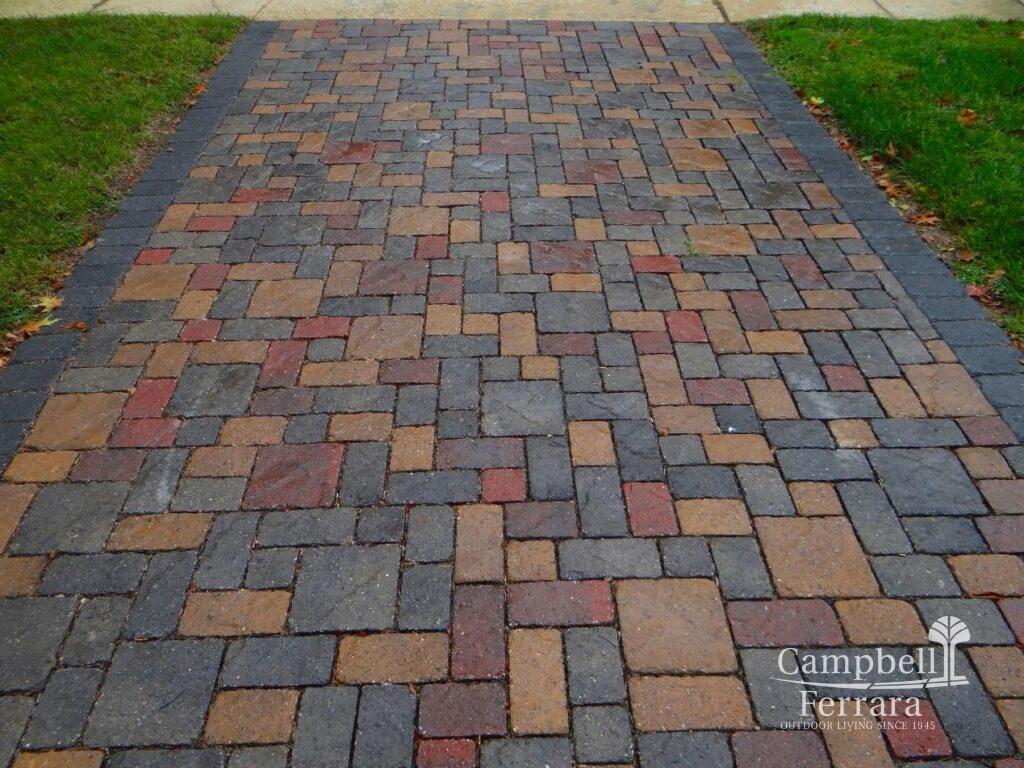
For walkways and driveways, using permeable pavement is an innovative way to address drainage challenges. Gravel, porous concrete, or specialized pavers allow water to infiltrate the ground rather than run off, causing puddles or erosion.
This solution is especially relevant during Northern Virginia winters when frozen or saturated soil can make traditional paving problematic. Permeable pavements not only manage water effectively but also integrate seamlessly into your hardscape design, enhancing your property’s overall appearance. Combining permeable surfaces with smart grading ensures water flows where it should, protecting both your patios and your landscape lighting installations from potential water damage.
The Role of Grading in Winter Drainage
No matter which solution you choose, proper grading is the foundation of adequate drainage. Grading involves shaping your yard so that water naturally flows away from structures and problem areas. Even the most advanced drainage systems won’t perform optimally without correct grading.
In Northern Virginia, winter conditions make this especially important. Frost, heavy rains, and melting snow can reveal weak spots in your landscape that went unnoticed during drier months. Uneven soil or low-lying areas can collect water, creating puddles that may freeze overnight and pose hazards near walkways, patios, and other outdoor living spaces.
Poor grading can also compromise the performance of French drains, swales, and catch basins, leaving you with recurring drainage problems even after installing these systems.
Correct grading doesn’t just protect your property—it enhances the usability and safety of your outdoor living environment. With a properly graded yard, you can enjoy your outdoor entertainment areas and fire pits without worrying about mud or standing water. It also helps your plants thrive by preventing root rot and soil erosion, making features like rain gardens more effective and sustainable.
Campbell & Ferrara’s landscape experts can evaluate your property and design grading adjustments tailored to your yard’s unique conditions.
Whether it’s fine-tuning slopes for water runoff or integrating grading into a hardscape design, our team ensures that your drainage solutions work efficiently while complementing your yard’s aesthetics. By addressing grading during winter, you set the stage for a functional, beautiful, and resilient landscape all year round.
Conclusion
Taking the time to address drainage issues this winter can save you from costly repairs and soggy outdoor spaces later. By focusing on proper grading and implementing recommended solutions, you’ll create a safer, more functional, and visually stunning yard.
If you’re ready to take the next step, don’t hesitate to contact us at Campbell & Ferrara and discuss how our landscape and hardscape experts can help you transform your property.
Give us a call at (703) 354-6724 and start planning your winter drainage solutions today.
Related posts